


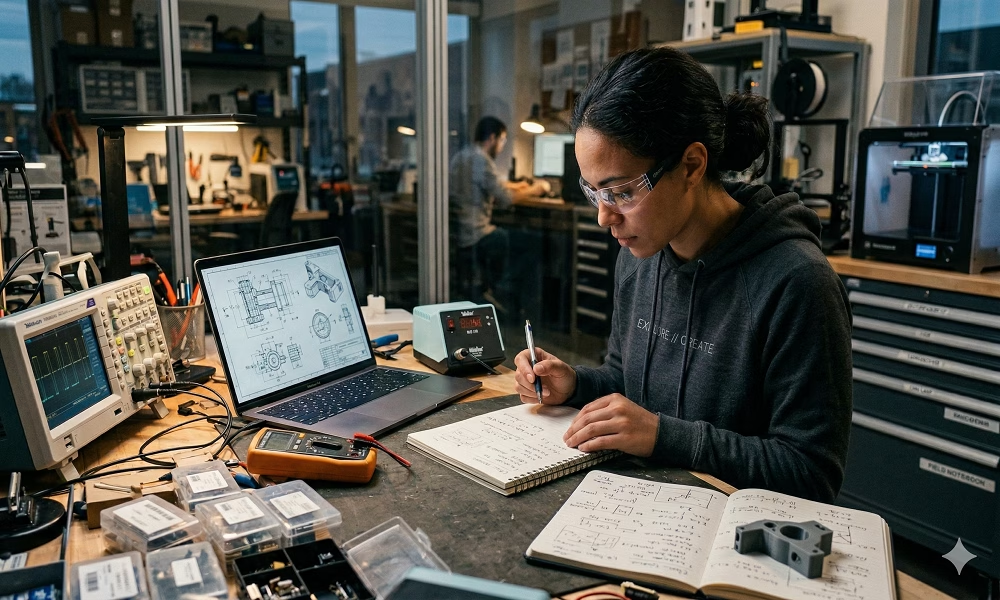
A working prototype is exciting. A successful experiment is rewarding. But for a researcher, there is another important step: turning that technical work into published knowledge. If you are researching electrical power, telecommunications, electronics, artificial intelligence, embedded systems or smart technologies at Jomo Kenyatta University of Agriculture and Technology (JKUAT), choosing the right journal can determine whether your work reaches the audience that can learn from it and build on it. The School of Electrical, Electronic and Information Engineering brings together research areas that are changing rapidly. That means your publication strategy should reflect the actual technology, problem and contribution behind your research. IPR Journals and Books provides engineering and technology publication options that researchers can explore.

What Makes SEEIE Research Different?
The School of Electrical, Electronic and Information Engineering is part of JKUAT’s College of Engineering and Technology. Its departments include Electrical and Electronic Engineering, Telecommunication and Information Engineering, and Electronic and Computer Engineering. JKUAT lists undergraduate and postgraduate programmes across electrical engineering, electronic and computer engineering, and telecommunication and information engineering.IPR Journals and Books offers publication routes that can be considered for several of these interdisciplinary research areas. The school’s research environment also reflects the rapid shift towards intelligent and sustainable engineering. Current JKUAT research themes include areas such as microgrid control, renewable energy, artificial intelligence, Internet of Things applications, embedded systems and control systems. This creates an important publication question: should a researcher choose a traditional engineering journal, a technology journal or a computing and engineering journal? IPR Journals and Books can help researchers explore different publication routes according to the focus of their manuscript.
Which Journal Fits Your Engineering Research?
The best journal depends on what your paper contributes. For broad electrical and electronic engineering research, the International Journal of Engineering Studies is a logical option to explore. For research centred on technology, intelligent systems, automation or connected systems, the International Journal of Technology and Systems may be more appropriate. If your work combines engineering with artificial intelligence, robotics, computing or emerging technologies, the Asian Journal of Computing and Engineering Technology provides another option. IPR Journals and Books currently publishes all three titles within its engineering and technology portfolio.
| Research focus | Journal to explore |
|---|---|
| Electrical and electronic engineering | International Journal of Engineering Studies |
| Power systems and renewable energy | International Journal of Engineering Studies |
| Control and engineering systems | International Journal of Engineering Studies |
| Telecommunications and digital systems | International Journal of Technology and Systems |
| Internet of Things and smart systems | International Journal of Technology and Systems |
| Artificial intelligence and intelligent systems | Asian Journal of Computing and Engineering Technology |
| Robotics and computing applications | Asian Journal of Computing and Engineering Technology |
| Interdisciplinary engineering technology | Asian Journal of Computing and Engineering Technology |
This table should guide your initial search rather than determine your choice automatically. IPR Journals and Books recommends that authors follow the relevant journal guidelines and ensure that their manuscript fits the journal’s subject area before submission.

Which IPR Journal Fits Power, Smart Technology, Artificial Intelligence and Telecommunications Research?
Electrical and information engineering research now covers a wide range of technologies. JKUAT researchers work on areas such as microgrid control, renewable energy, power-system modelling, rural electrification, artificial intelligence, embedded systems, cybersecurity, robotics, automation, cloud and edge computing, smart energy systems, mobile communications, wireless networks, satellite systems and Internet of Things applications. JKUAT School of Electrical, Electronic and Information Engineering If your study focuses on power systems, renewable energy, electrical engineering or engineering design, the International Journal of Engineering Studies may be worth exploring. For research centred on smart technology, automation, connected systems, telecommunications, artificial intelligence or digital infrastructure, the International Journal of Technology and Systems may offer a closer fit. Meanwhile, studies combining electrical or electronic engineering with artificial intelligence, robotics, computing, software or other emerging technologies can explore the Asian Journal of Computing and Engineering Technology. IPR Journals and Books
The best choice depends on the main problem, methods and contribution of your manuscript. Before submitting, review the scope and author guidelines of each journal and identify where your research fits most naturally. International Journal of Engineering Studies | International Journal of Technology and Systems | Asian Journal of Computing and Engineering Technology
Submission email: journals@iprjb.org
How Can You Tell If a Journal Is Refereed?
A suitable subject area is only one part of the decision. You should also understand how the journal evaluates submitted research. A refereed journal sends manuscripts to academic reviewers who assess the quality and contribution of the research before publication. The review may consider the research question, methodology, analysis, results and conclusions. The International Journal of Technology and Systems, for example, states that it uses a double-blind peer-review process. The Asian Journal of Computing and Engineering Technology also states that it follows double-blind peer review. IPR Journals and Books provides authors with journal-specific submission information so they can understand the requirements before submitting.
Why Should You Check Indexing Before Submission?
Indexing is another issue that matters to researchers, especially postgraduate students.
Journal indexing enhances the visibility and accessibility of published research, making it an important consideration for postgraduate students and academic researchers. IPR Journals and Books provides information about the indexing and discovery services associated with its engineering journals, including Google Scholar, EBSCOhost, Crossref, Scilit and Dimensions, among others.
However, indexing should never be assumed to satisfy every university’s requirements automatically. If your paper forms part of your JKUAT Master’s or doctoral programme, confirm the current publication and indexing requirements with your department or postgraduate office before submission. Jomo Kenyatta University of Agriculture and Technology remains the appropriate institutional reference for your programme requirements.
What Makes a Strong SEEIE Manuscript?
A strong engineering manuscript does more than describe a project.
It should clearly identify the problem, explain the approach, present evidence and show why the findings matter. For example, instead of simply stating that you developed a smart energy system, explain what problem it solves, how it performs and what makes the approach useful. This is where IPR Journals and Books becomes relevant. Its journal submission requirements ask authors to follow formatting and bibliographic guidelines and to submit original work that has not already been published or submitted elsewhere.
A Quick Pre-Submission Check
Before submitting your engineering paper, ask:
- Does the journal’s scope match my research?
- Is my research question clearly stated?
- Does my methodology support my conclusions?
- Have I explained what is new about the study?
- Have I followed the journal’s author guidelines?
- Have I checked the current indexing information?
- Have I confirmed my university’s publication requirements?
Taking these steps early can save time and reduce avoidable revisions. IPR Journals and Books provides journal-specific submission guidelines that authors can review before sending their manuscripts.
Why Publish Beyond the Thesis?
An engineering thesis may contain valuable findings, but publication allows those findings to reach a much wider audience.
Your work could interest engineers, researchers, technology companies, policymakers, students and industry professionals. JKUAT itself highlights the importance of industry collaboration and practical engineering applications, while recent SEEIE activities show students presenting research to professional audiences. IPR Journals and Books provides a route for researchers who want to move their work from completed research towards publication.
Ready to Turn Your Engineering Research Into a Publication?
Your project may have started as a laboratory experiment, a power-system model, a telecommunications study, a prototype or an artificial-intelligence application. But its value does not have to end when the project report is submitted. For researchers in the School of Electrical, Electronic and Information Engineering at JKUAT, the International Journal of Engineering Studies, International Journal of Technology and Systems, and Asian Journal of Computing and Engineering Technology offer different publication directions depending on the research.
International Journal of Engineering Studies — for broad engineering research.
International Journal of Technology and Systems — for technology and systems research.
Asian Journal of Computing and Engineering Technology — for computing and engineering technology research.
Submission email: journals@iprjb.org. Your engineering research should do more than solve a problem in the laboratory. Publish the knowledge, share the solution and give your work an opportunity to influence the next engineering innovation.
IPR Journals and Books — helping researchers move from engineering ideas and experiments to published knowledge.