


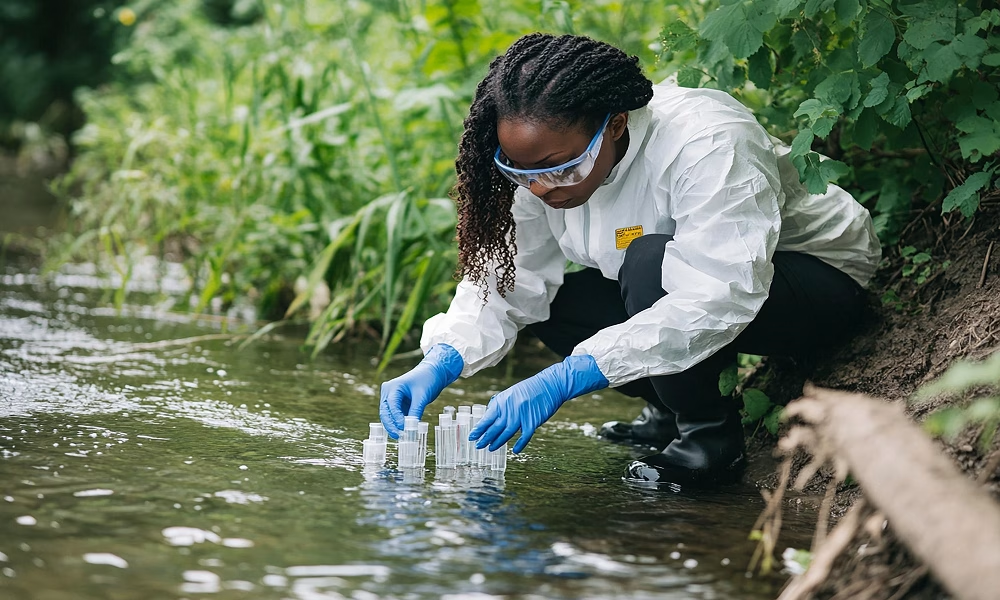
Environmental challenges are shaping the future of communities, economies and ecosystems. From climate change and pollution to biodiversity loss and environmental education, researchers play an important role in identifying solutions that support sustainable development. At Kenyatta University’s Department of Environmental Science and Education, research can contribute to environmental conservation, climate resilience, sustainable resource management and public awareness. But what happens when important environmental findings remain unpublished in a thesis or dissertation? Valuable knowledge may never reach the policymakers, educators, conservation organizations and communities that need it. Publishing research in peer-reviewed journals helps bridge this gap. Through IPR Journals and Books, environmental science and education researchers can explore academic journals suited to their research interests and share their findings with a wider audience.


What Research Areas Does the Department of Environmental Science and Education Cover?
The Department of Environmental Science and Education, within Kenyatta University’s School of Agriculture and Environmental Sciences, supports research addressing environmental challenges affecting Kenya and beyond. Its research interests include water and air pollution, waste management, climate change, agroforestry, environmental education, renewable energy and sustainable urban development. These areas provide opportunities for researchers to develop practical solutions to environmental problems. Publishing findings from these fields can help improve environmental decision-making, support conservation programmes and strengthen public understanding of sustainability. For example, research on water pollution can inform water management policies, while studies on environmental education can help schools and communities adopt more sustainable practices.
Which IPR Journals Are Suitable for Environmental Science and Education Research?
Researchers can explore the following five journals published by IPR Journals and Books. Their subject areas provide possible publication opportunities for environmental science, climate change, conservation and environmental education research.
| Research area | Recommended IPR Journal | Journal link |
|---|---|---|
| Environmental Pollution, Conservation and Management | International Journal of Environmental Sciences | View Journal |
| Climate Change, Adaptation and Sustainability | International Journal of Climatic Studies | View Journal |
| Biodiversity, Ecology and Natural Resources | International Journal of Biology | View Journal |
| Environmental Education and Sustainability Learning | African Journal of Education and Practice | View Journal |
| Environmental Policy and Governance | Journal of Public Policy and Administration | View Journal |
Submission email for all five journals: journals@iprjb.org
Submit online: IPR Journals and Books Manuscript Submission
Choosing the right journal depends on your research objectives, methodology and findings. For example, a study examining climate change adaptation among rural communities may suit the International Journal of Climatic Studies, while research on waste management or water pollution may align with the International Journal of Environmental Sciences. Studies examining environmental awareness among secondary school students may be suitable for the African Journal of Education and Practice. Researchers should review each journal’s current aims, scope and author guidelines before submitting.
What Are CUE’s Publication Requirements for Master’s and PhD Students?
The Commission for University Education (CUE) has published the Draft Universities (General) Regulations, 2026, which propose publication requirements for postgraduate students in Kenya.
Under the draft regulations:
-
Master’s degree: At least one paper accepted for publication in a refereed journal.
-
PhD degree: At least two papers accepted for publication in scientifically indexed refereed journals.
The doctoral provision emphasizes the importance of publishing research in journals that meet scientific indexing and peer-review standards.
Why Should Environmental Science Researchers Check Journal Indexing?
Journal indexing makes published research easier to discover through scholarly databases. However, a peer-reviewed journal is not automatically indexed in every academic database. Peer review involves academic experts evaluating research manuscripts for quality, relevance and methodological soundness. Journal indexing refers to the inclusion of a journal’s content in academic discovery databases that apply their own selection criteria. For environmental science and education researchers, verifying journal indexing is especially important when publishing to meet postgraduate requirements. Before submitting, confirm the journal’s indexing claims through the relevant database and check whether Kenyatta University recognizes it for your academic programme.


What Are the Benefits of Publishing with IPR Journals and Books?
Publishing environmental research with IPR Journals and Books can offer several potential benefits to students, lecturers and researchers.
-
Peer Review: Academic reviewers assess manuscripts and provide feedback that can improve research quality.
-
Open Access: Published findings can be accessible to researchers, environmental organizations, policymakers and communities.
-
Research Visibility: Online publication helps environmental research reach audiences beyond the university.
-
DOI Registration: Digital Object Identifiers, where assigned, support reliable citation and article discovery.
-
Publication Certificates: Authors can inquire about certificates documenting their published research.
-
Publication Fees: Authors can review the applicable publication charges before submitting their manuscripts.
-
Editorial Guidance: Journal submission instructions help authors prepare and format their manuscripts.
-
Academic Development: Published research can strengthen academic profiles and support scholarly collaboration.
-
Environmental Impact: Research findings can inform conservation strategies, climate adaptation and sustainability initiatives.
Researchers should confirm current fees, indexing status, DOI arrangements and editorial services directly with the publisher. Publication does not automatically guarantee academic recognition or graduation eligibility.
How Can Published Environmental Research Contribute to Sustainable Development?
Environmental research becomes more useful when its findings are accessible to people who can apply them. For example, studies on climate change adaptation can guide community resilience programmes, while research on biodiversity conservation can support habitat protection and natural resource management. Environmental education research can also help teachers, schools and communities develop greater awareness of environmental challenges. Publishing these findings allows other researchers to build on existing knowledge and helps connect academic research with practical sustainability initiatives.
What Should You Check Before Submitting Your Research?
Before submitting your manuscript, use this checklist to improve its readiness for publication:
- Originality: Ensure your research is original, properly cited and not under consideration by another journal.
- Journal Relevance: Choose a journal whose aims and scope match your environmental research topic.
- Manuscript Structure: Include a clear title, abstract, keywords, introduction, methodology, findings, discussion and conclusion.
- Research Quality: Verify the accuracy of environmental data, sampling procedures, laboratory results and statistical analyses.
- References: Ensure all citations and references follow the selected journal’s guidelines.
- Ethical Compliance: Include relevant research approvals, participant consent and environmental research permits where applicable.
- Figures and Tables: Check that maps, photographs, graphs and tables are clearly labelled and appropriately referenced.
- Publication Fees and Indexing: Confirm the journal’s current charges, indexing status and university recognition requirements.
- Final Proofreading: Correct grammatical errors, inconsistencies and formatting problems before submission.
Ready to Publish Your Environmental Research?

Your findings could contribute to stronger environmental policies, improved conservation practices and more sustainable communities. Take the next step by selecting a suitable journal and preparing your manuscript for peer review.
Submit online: Submit Your Research Article
Submission email: journals@iprjb.org
Explore available journals: IPR Journals and Books
Turn your environmental research into published knowledge that can support conservation, education and sustainable development.